Motor placement is one of the first specs listed on any e-bike, but it's rarely explained well — "hub motor" and "mid-drive motor" get treated as a quality tier rather than what they actually are: two different ways of getting power to the wheel, each with real tradeoffs depending on where and how you ride.
Side-by-Side Comparison
Hub Motor
Mid-Drive Motor
Motor Location
Built into the wheel hub, almost always the rear
Mounted at the bottom bracket, between the pedals
How It Drives the Bike
Powers the wheel directly, independent of your gear selection
Powers the chain and drivetrain, so assist is affected by what gear you're in
Hill Performance
Adequate for flat-to-moderate grades
Stronger and more efficient on steep or sustained climbs
Drivetrain Wear
Lower — the motor bypasses the chain and cassette entirely
Higher — motor torque runs through the same chain and cassette you pedal with
Service & Repair
Simpler and cheaper; most bike shops can handle it
More complex — often needs a shop familiar with mid-drive systems
Typical Price Band
Common under $1,500
Common above roughly $2,000
Best For
Flat-to-moderate commuting
Steep hills or mixed/off-road terrain
Why Hub Motors Dominate the Budget Segment
A hub motor drives the wheel directly, which makes it mechanically simple — it doesn't interact with your gears, chain, or cassette at all, so there's less that can go wrong and less for a shop to diagnose when something does. That simplicity is exactly why almost every e-bike under $1,500 uses one: it's cheaper to build, cheaper to service, and perfectly adequate for the flat-to-moderate commutes most riders in that price range are actually doing.
Where Mid-Drive Earns Its Premium
A mid-drive motor is mounted at the bottom bracket and powers the drivetrain instead of the wheel, which means it drives through your gears rather than around them. That lets it apply power more efficiently on steep or sustained climbs — the motor can work through a lower gear the same way your legs would, instead of pushing a fixed wheel speed regardless of grade. It's also mounted low and central on the frame rather than out at the wheel, which most riders notice as more balanced, natural-feeling handling. That efficiency and feel is why mid-drive shows up almost exclusively above roughly $2,000.
The Tradeoff Nobody Mentions: Drivetrain Wear
Because a mid-drive motor pushes its power through the same chain and cassette you pedal with, that drivetrain absorbs both your effort and the motor's torque — which wears it out faster than the chain on a hub-motor bike, where the motor never touches the drivetrain at all. It's not a dealbreaker, but it does mean budgeting for more frequent chain and cassette replacement if you're riding a mid-drive bike regularly.
Which One Is Right for You?
Choose a hub motor if:
Your commute is flat-to-moderate, without sustained steep climbs
You want the lower-cost, lower-maintenance option
You'd rather a motor that never touches your drivetrain
You're shopping under roughly $1,500
Choose a mid-drive motor if:
Your commute or riding regularly includes steep or sustained hills
You ride mixed or off-road terrain where efficient power delivery matters
You want more balanced handling from a lower, more central motor position
You're fine paying more and budgeting for extra drivetrain wear
Examples of each type
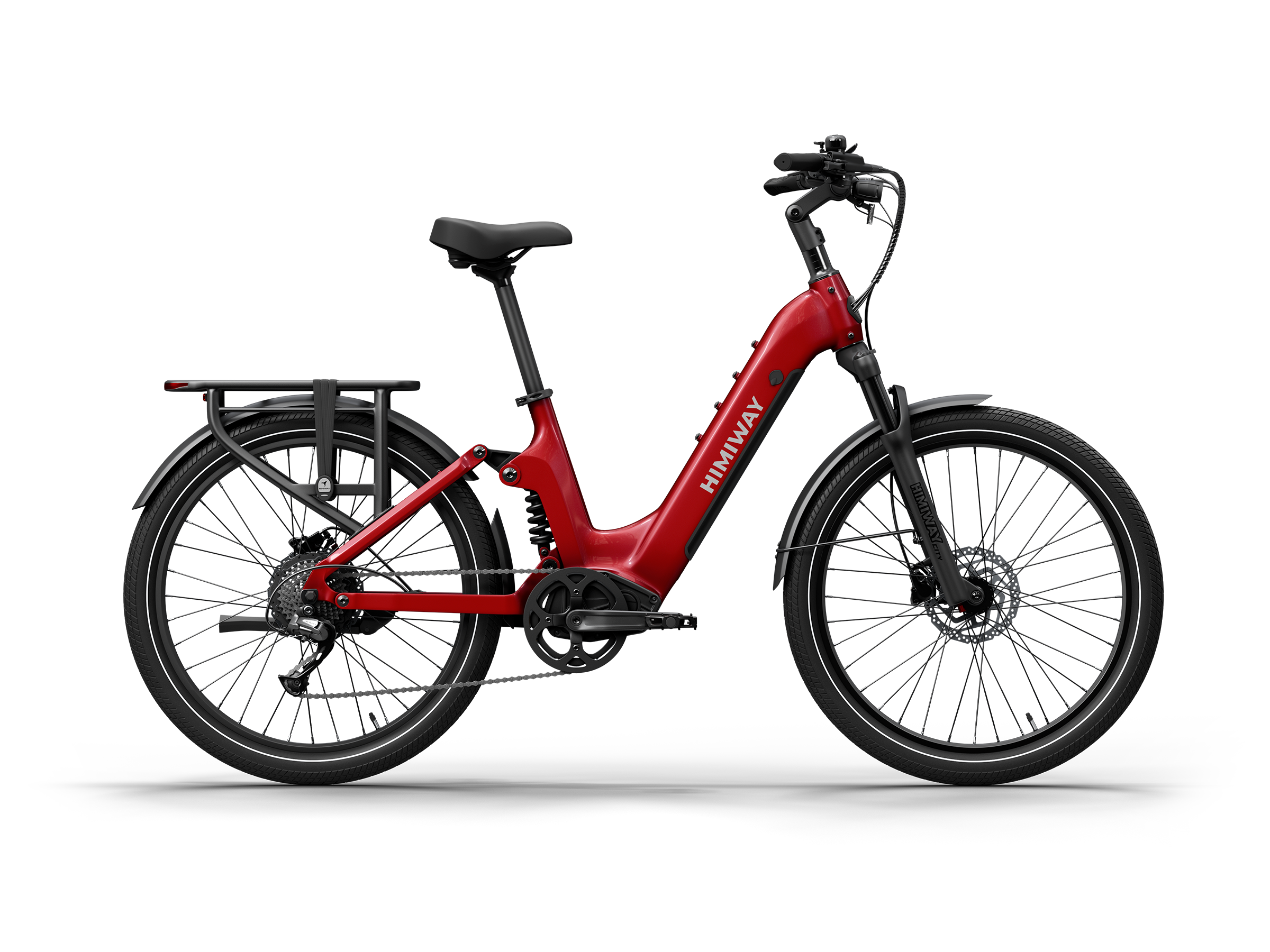
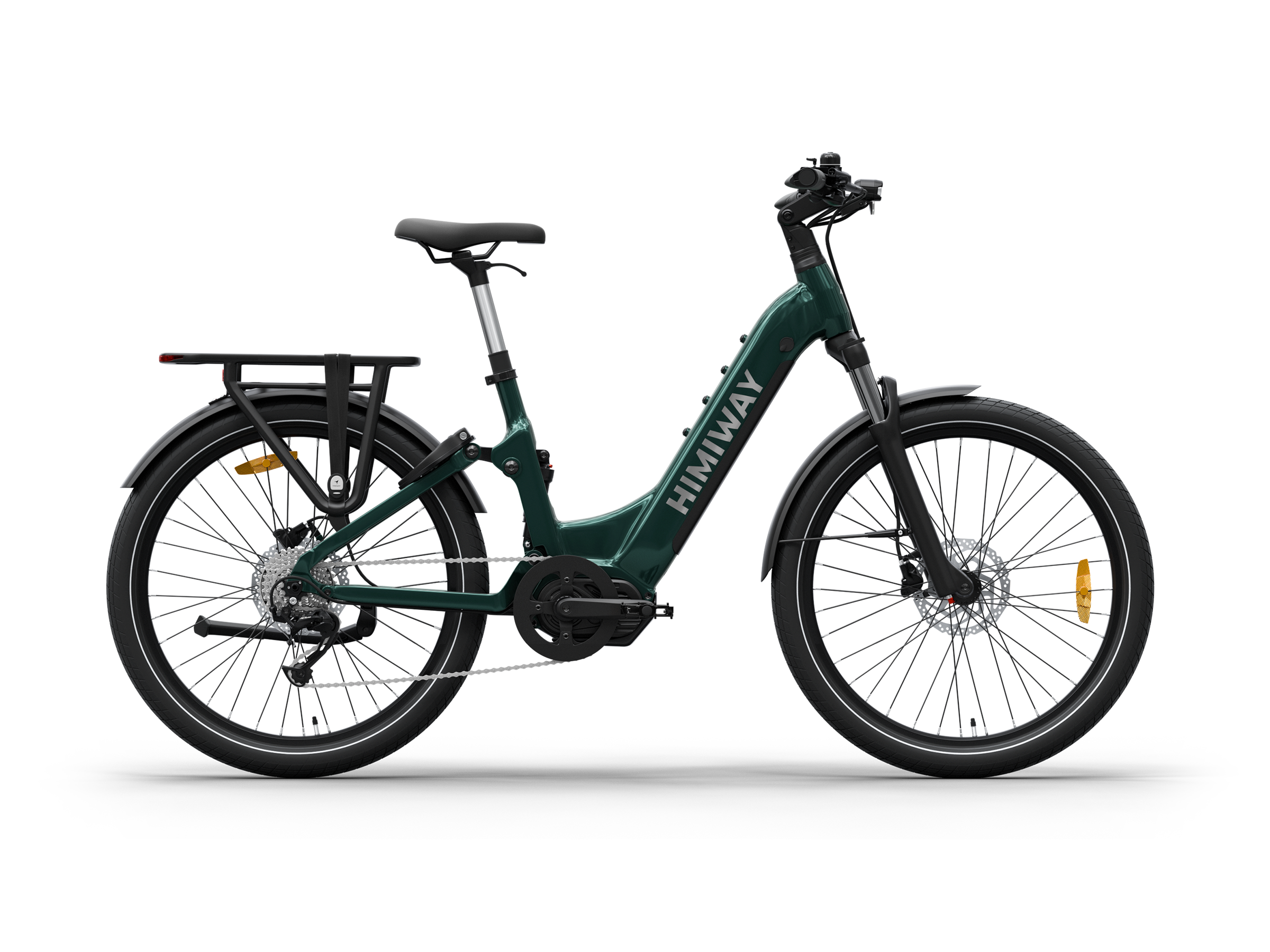
Example hub-motor commuter
10% offHub motorCommuting
Motor
Hub
Himiway
Himiway A7 Commuter E-Bike
$1,999.00$1,799.00Save 10%
Detail
Daily Commuting, Comfort, Errands & Cargo
Detail
Hub motor
Detail
Use: Commuting, Cargo
A step-thru full-suspension commuter e-bike with up to 70 miles of range, built for a comfortable, upright ride on pavement and light trails.
This page contains affiliate links. If you buy through one, we may earn a commission at no extra cost to you. Learn more.
FAQ
Is a mid-drive motor better than a hub motor?
Not universally — it depends on your terrain. Mid-drive is more efficient on steep or sustained climbs and feels more balanced on the bike, but it costs more, wears out your chain and cassette faster, and needs a more specialized shop for repairs. A hub motor is simpler, cheaper, and entirely adequate for flat-to-moderate commuting.
Do mid-drive motors really wear out the chain faster?
Yes — a mid-drive motor pushes its power through the same chain and cassette you pedal with, so that drivetrain is absorbing both your effort and the motor's torque. A hub motor drives the wheel directly and never touches the drivetrain, so it doesn't add that extra wear.
Can I find a mid-drive e-bike under $1,500?
It's uncommon. Mid-drive motors and the frames built around them cost more to manufacture, so they show up almost exclusively above roughly $2,000. Under $1,500, expect a hub motor on nearly every bike.
Which motor type is quieter?
Hub motors are generally quieter and simpler, since they drive the wheel directly with no interaction with the chain or gears. Mid-drive motors can generate some drivetrain noise, especially under load on a climb, though this varies by manufacturer and model.