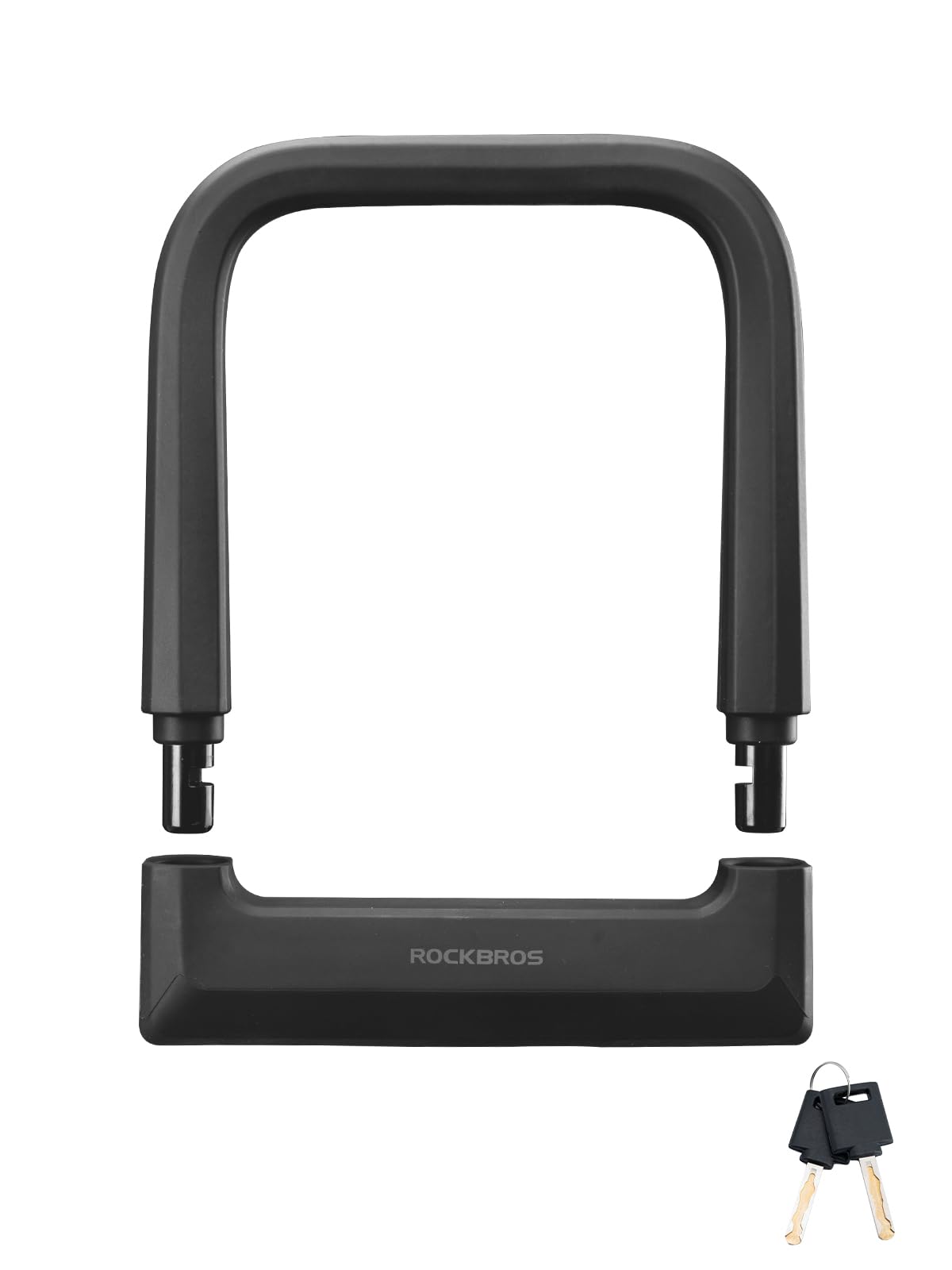
Example U-lock
Primary
- Security
- Primary
ROCKBROS Heavy Duty Bike U-Lock with 4Ft Security Cable
$31.99
- Detail
- Frame + Wheel Double-Lock Set
- Detail
- Use: Primary
A U-lock and 4ft steel security cable set for double-locking your frame and wheel.
Comparison
They’re not interchangeable — one of these three is weak enough that it should never be your only lock.
A lock’s job isn’t to make theft impossible — it’s to make your bike take longer to steal than the one parked next to it, or than a thief is willing to spend in a visible public spot. Not every lock type does that job equally well, so it’s worth understanding the real security gap between them before you buy.
| U-Lock | Chain Lock | Cable Lock | |
|---|---|---|---|
| Security Level | High — the baseline standard for commuter security | High — comparable to a quality U-lock | Low — the weakest common lock type |
| Construction | Hardened-steel shackle, resists bolt cutters and prying | Hardened-steel chain links with a separate lock body | Braided steel cable — easily cut with basic tools |
| Weight | Moderate | Heaviest of the three | Lightest of the three |
| Flexibility Around Frame/Wheels | Limited — rigid shackle has a fixed opening size | High — flexes around awkward frames or through both wheels | High, but flexibility doesn’t add security here |
| Best Role | Primary lock | Primary lock — a heavier alternative to a U-lock | Secondary lock only, e.g. for a second wheel |
| Typical Cost | $$ | $$–$$$ | $ |
A quality U-lock is the single most important lock in most commuters' setup — the hardened-steel shackle and rigid body resist bolt cutters and prying far better than a cable ever will, and it does that at a moderate weight that's reasonable to carry daily. If you're only buying one lock, this is almost always the right one.
A chain lock with a hardened-steel chain and separate lock body offers security in the same range as a U-lock, with more flexibility to wrap around an awkward frame shape or through both wheels at once — a U-lock's rigid shackle can't always reach around unusual tubing or a wide load. The tradeoff is weight: a chain long enough to be genuinely flexible is heavier than a comparable U-lock.
Cable locks are the weakest common option — a determined thief can cut one with basic tools in seconds, so a cable should never be your only lock in an unattended public location. Where a cable lock does earn a place is as a second, supplementary lock: paired with a U-lock or chain lock through the frame, a cable through the front wheel covers a spot the primary lock can't reach, without the cost or weight of a second heavy-duty lock.
Example U-lock
A U-lock and 4ft steel security cable set for double-locking your frame and wheel.
Example chain lock
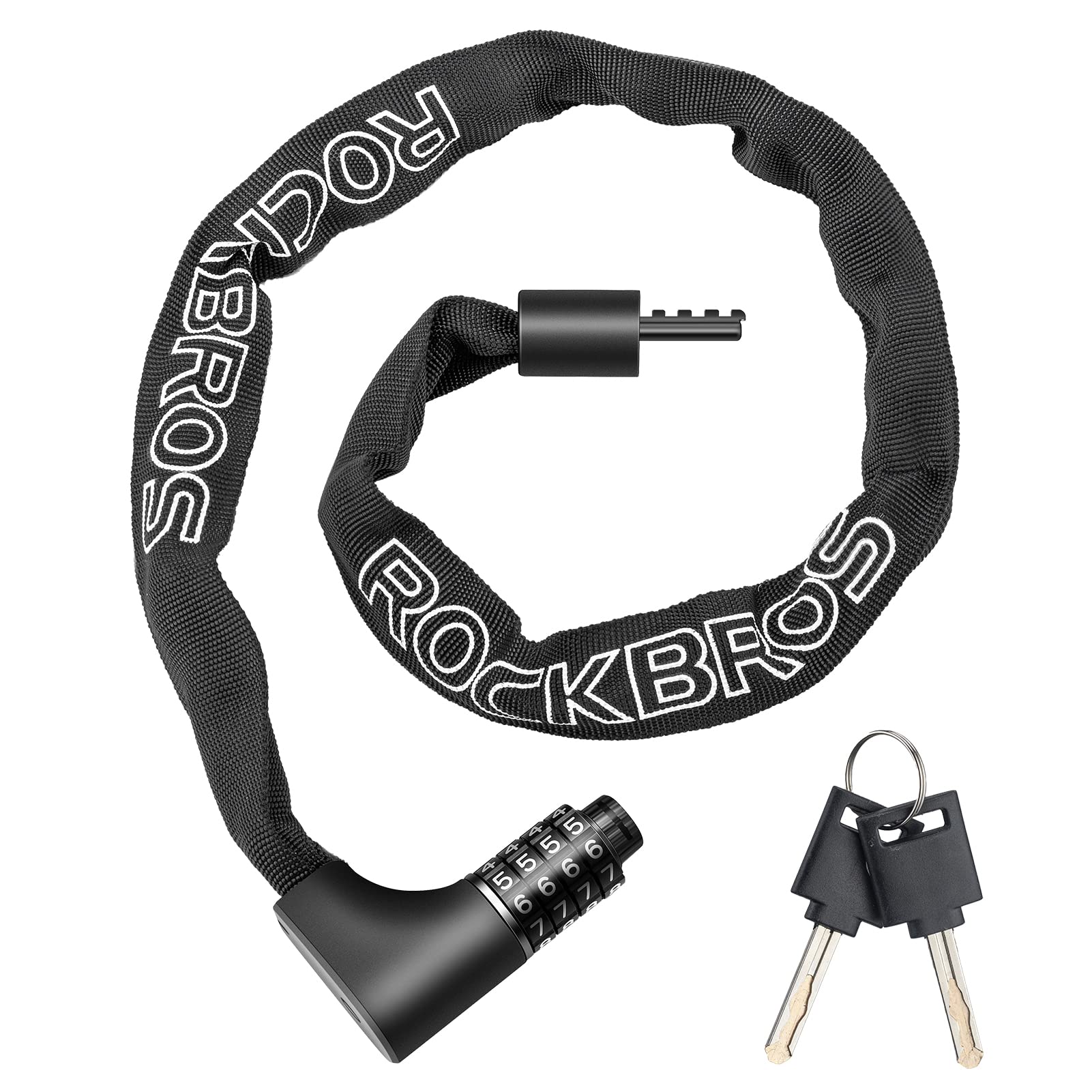
A 17.19mm hardened steel chain lock with dual unlock: 4-digit combo or 2 keys.
Example cable lock — secondary only
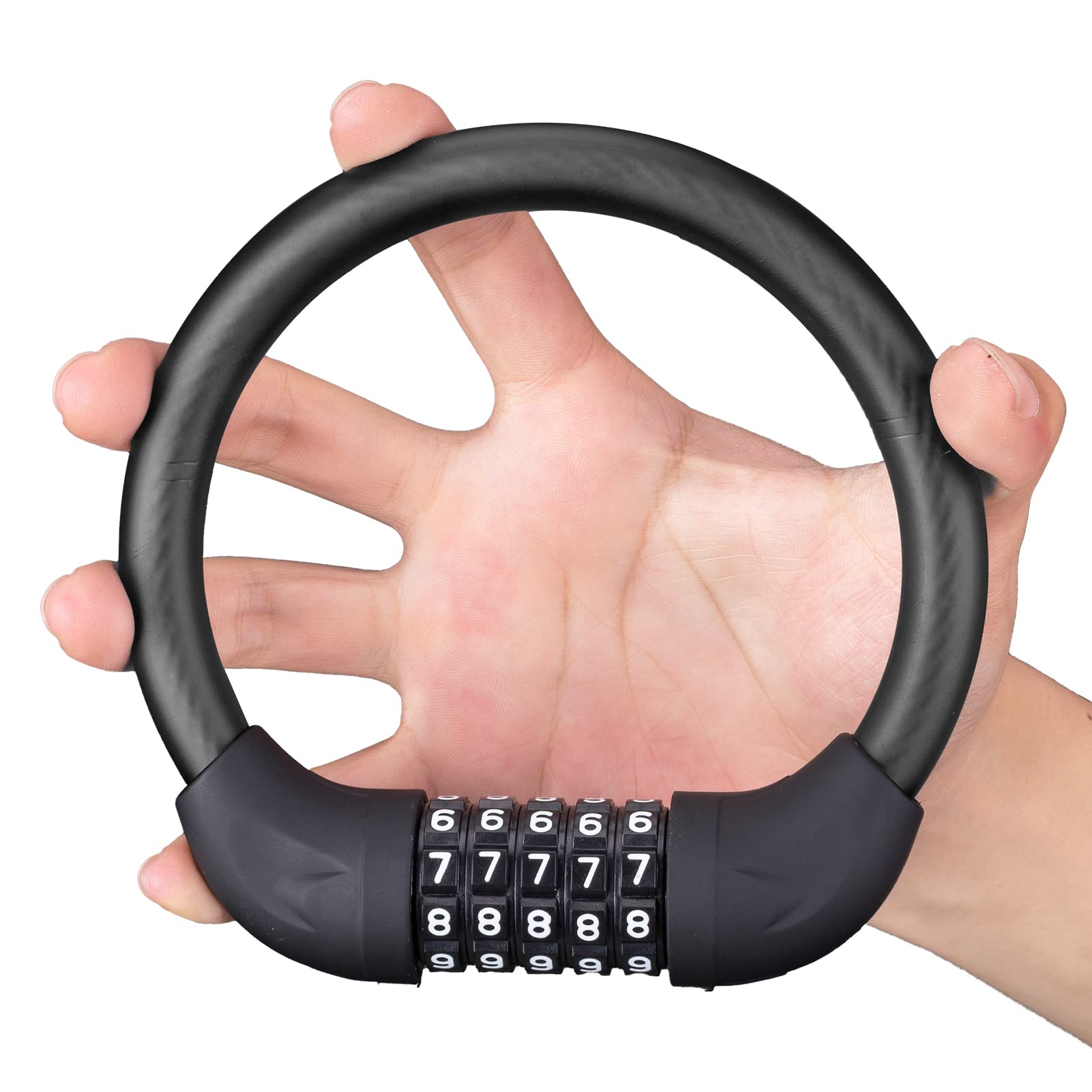
A lightweight 5-dial combination cable lock, easy to set and reset with no keys.
This page contains affiliate links. If you buy through one, we may earn a commission at no extra cost to you. Learn more.
Roughly comparable, not clearly better — a quality chain lock and a quality U-lock both use hardened steel and resist common tools well. The chain's advantage is flexibility around awkward shapes; the U-lock's advantage is lower weight for similar security.
Cable locks can be cut with basic tools like wire cutters in seconds, which makes them far less theft-resistant than a U-lock or chain lock. They're fine as a backup for a second wheel, but leaving a bike secured only by a cable in public is a real risk.
It's a real risk even for a short stop, since cutting one takes seconds, not minutes. If you're only carrying one lock, a U-lock or chain lock is a safer default even for brief errands.
The full buying guide, including when to combine two locks and how to lock up correctly.
Every lock guide, comparison, and theft-prevention step we have, in one place.
Every commuting guide, comparison, and checklist we have, in one place.
U-lock, chain lock, and other lock types from this comparison, defined in one place.