Belt-drive bikes have become more common on commuter and single-speed models, marketed heavily on low maintenance. That reputation is mostly earned, but belt drive isn’t a strict upgrade — it comes with real tradeoffs worth understanding before you pay the premium.
Side-by-Side Comparison
Belt Drive
Chain Drive
Maintenance
Minimal — no lubrication needed, rarely needs cleaning
Regular — needs periodic lube and cleaning
Lifespan
Often longer, especially in wet/gritty conditions
Shorter, especially without regular maintenance
Weight
Slightly lighter in most cases
Slightly heavier, but marginal
Gearing Compatibility
Single-speed or internal-geared hub only
Works with derailleur and wide gear ranges
Repair / Replacement
Requires a splittable frame; less common at local shops
Easily repaired or replaced at nearly any bike shop
Upfront Cost
Higher — bike and frame must be belt-compatible
Lower — standard on the vast majority of bikes
Noise
Quieter
Slightly louder, more with wear
The Case for Belt Drive
If low maintenance is your top priority — no grease on your pants, no chain lube, less frequent cleaning — belt drive delivers on that promise, especially for wet-weather commuters who’d otherwise be re-lubing a chain every week or two. It also tends to last longer than a chain under the same conditions.
The Case for Chain Drive
Chain drive remains the default for good reasons: it works with derailleur gearing (belt drive doesn’t, since a belt can’t shift across a derailleur cassette the way a chain can), it’s cheaper, and virtually any bike shop can repair or replace a chain on the spot. If you need a wide gear range for hills, or you want the cheapest and most universally serviceable option, chain drive is still the practical choice.
Which One Is Right for You?
Choose belt drive if:
You want minimal maintenance and no chain grease
You’re riding a single-speed or internal-geared-hub commuter
Your commute is flat enough that you don’t need wide-range gearing
You’re fine paying a premium and finding a shop that services belts
Choose chain drive if:
You need derailleur gearing for hills or varied terrain
You want the lowest upfront cost
You want guaranteed repair availability at any bike shop
You don’t mind periodic chain lubrication and cleaning
Examples of each type
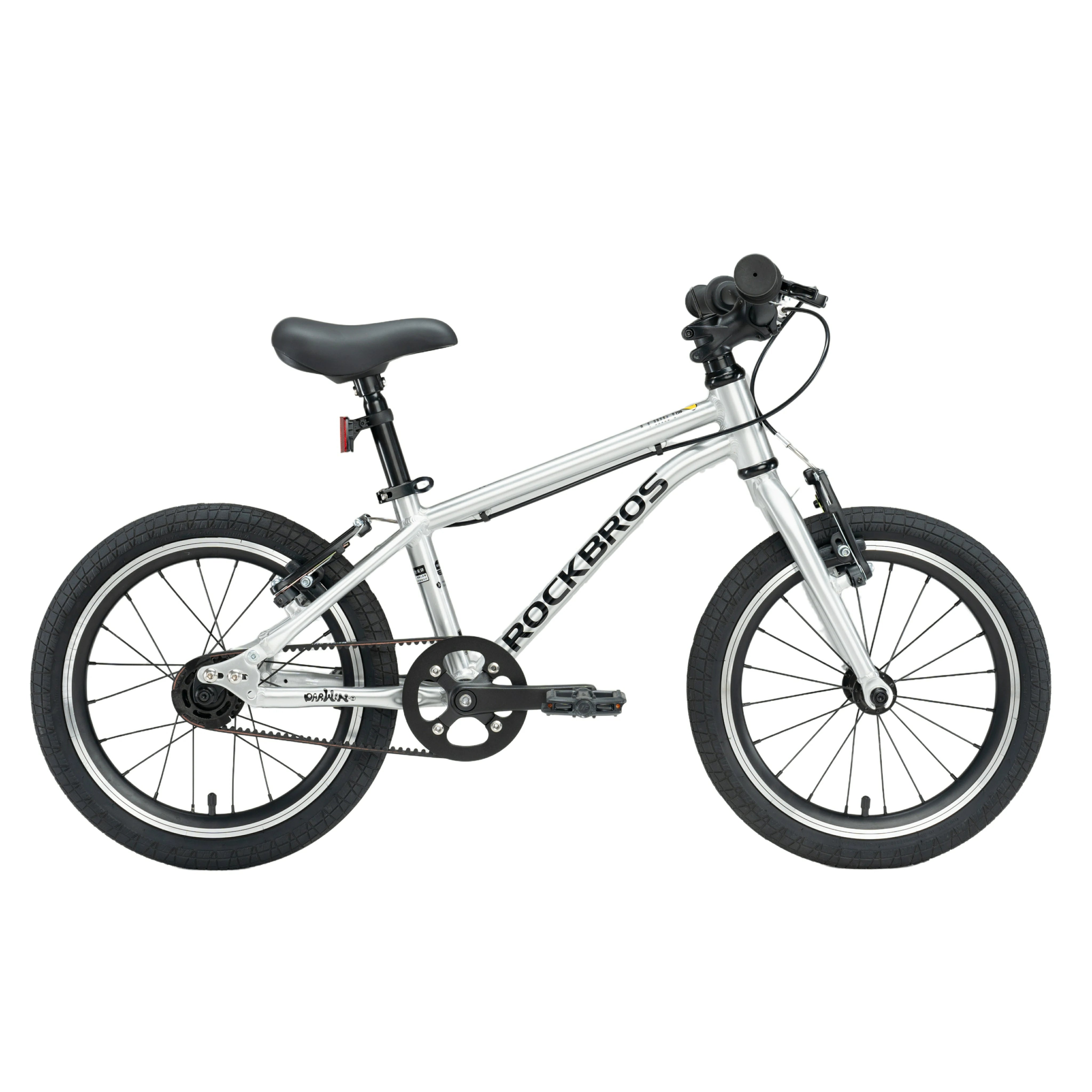
Example belt-drive bike
20% offPedal16/20 in wheels
Wheel
16/20"
ROCKBROS
ROCKBROS Darwin II Kids Belt-Drive Bike (16"/20")
$439.99$349.99Save 20%
Detail
Low-Maintenance Kids’ Commuting
Detail
16/20 in wheels
Detail
Use: Pedal
An aluminum kids’ bike with a low-maintenance belt drive, offered in 16" (ages 5–9) and 20" (ages 6–12) sizes.
This page contains affiliate links. If you buy through one, we may earn a commission at no extra cost to you. Learn more.
FAQ
Is belt drive better than chain drive for commuting?
It depends on your priorities. Belt drive needs less maintenance and often lasts longer, but only works with single-speed or internal-geared-hub setups and costs more upfront. Chain drive is cheaper, universally repairable, and supports wide-range derailleur gearing for hills.
Can you put a belt drive on any bike?
No — belt drive requires a frame with a splittable rear triangle (since a belt, unlike a chain, can’t be opened and closed without special links) and is only compatible with single-speed or internal-geared-hub drivetrains, not derailleurs.
How long do belt drives last compared to chains?
Belt drives typically outlast chains, especially in wet or gritty riding conditions, since there’s no lubrication to wash away or attract grit. Exact lifespan varies by riding conditions and mileage.