Start Here
Entry-level trail: ROCKBROS MT200 Mountain BikeBuying Guide
Best Mountain Bikes for the Money
The spec sheet gets confusing fast. Here's what actually separates an entry-level trail bike from one worth paying more for.
Mountain bike spec sheets pile on jargon fast — wheel size, fork travel, lockout, drivetrain speed count, brake type — and a lot of it doesn't matter much for casual trail riding. This guide focuses on the handful of specs that actually predict how a bike rides and holds up, using real bikes across a real price range as the worked example instead of abstract advice.
Decision Point
Wheel Size: 27.5" vs. 29" for AdultsLast Checked
2026-08-03Picks from our shop
Choose This If
- ROCKBROS MT200 Mountain Bike: Entry-Level Trail Riding
- ROCKBROS MT400 Mountain Bike: Trail Riding, Urban Off-Road
- ROCKBROS MT600 Mountain Bike: Serious Trail Riding, Technical Terrain
Skip This If
- You already know you want more travel and better brakes.
- You need a pavement bike.
- You ride bike paths and want to spend less.
| Detail | ROCKBROS MT200 Mountain Bike | ROCKBROS MT400 Mountain Bike | ROCKBROS MT600 Mountain Bike |
|---|---|---|---|
| Fit | Entry-level trail | Mid trail | More serious trail |
| Price | $399.99 | $599.99 | $889.99 |
| Best For | Entry-Level Trail Riding | Trail Riding, Urban Off-Road | Serious Trail Riding, Technical Terrain |
| Key Specs | See product details | See product details | See product details |
Entry-level trail
23% offEntry
- Trail
- Entry
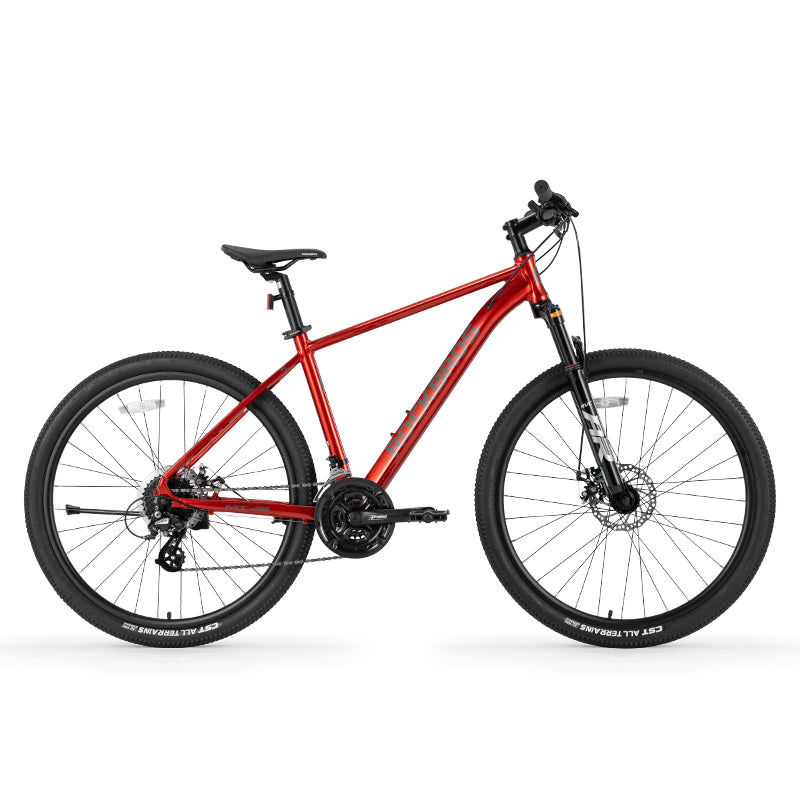
ROCKBROS MT200 Mountain Bike
$519.99$399.99Save 23%
- Detail
- Entry-Level Trail Riding
- Detail
- Use: Entry
A 27.5-inch entry-level mountain bike with a lockout suspension fork and Shimano 24-speed drivetrain.
Mid trail
45% offTrail
- Trail
- Trail
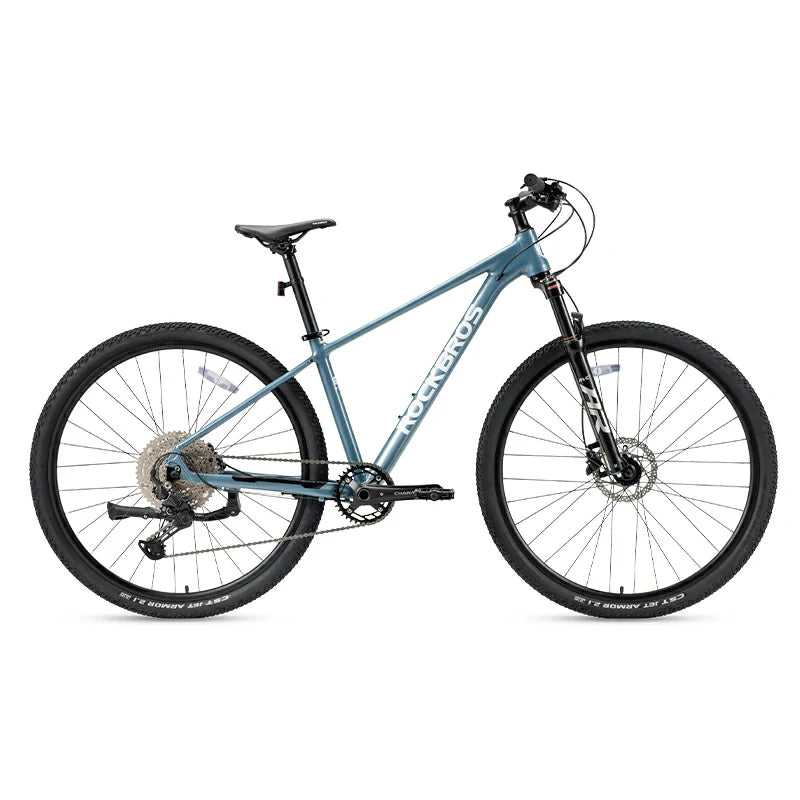
ROCKBROS MT400 Mountain Bike
$1,099.99$599.99Save 45%
- Detail
- Trail Riding, Urban Off-Road
- Detail
- Use: Trail
A 29-inch mountain bike with a hydraulic-lockout suspension fork, Shimano CUES 10-speed drivetrain, and hydraulic disc brakes.
More serious trail
31% offTrail
- Trail
- Trail
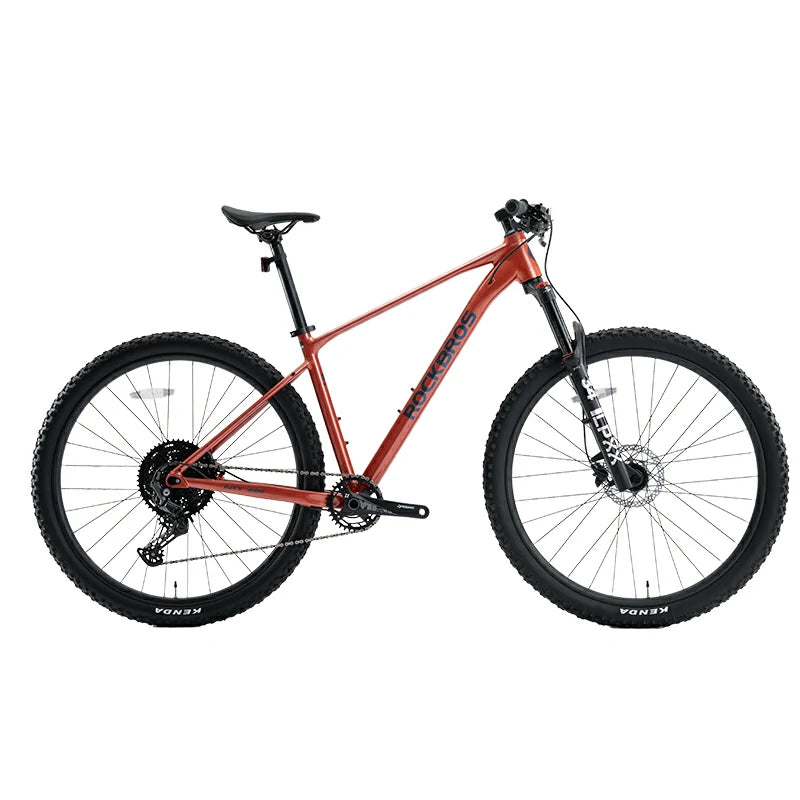
ROCKBROS MT600 Mountain Bike
$1,299.00$889.99Save 31%
- Detail
- Serious Trail Riding, Technical Terrain
- Detail
- Use: Trail
A 29-inch mountain bike with a 140mm air suspension fork, Shimano Deore 12-speed drivetrain, and hydraulic disc brakes.
This page contains affiliate links. If you buy through one, we may earn a commission at no extra cost to you. Learn more.
Wheel Size: 27.5" vs. 29" for Adults
29" wheels roll over roots and rocks more easily and hold speed better once you're moving, which is why they've become the default on most modern adult trail bikes. 27.5" wheels are a little more maneuverable and feel lighter to accelerate and change direction, which some riders prefer on tighter, more technical trails. Neither is objectively better — it's a real tradeoff, not a marketing upgrade, so don't assume the bigger number is automatically the right pick.
Kids and teens ride smaller wheels sized to their height rather than a fixed adult standard — 24" and 26" wheels are typical for younger riders, scaled down the same way a kids' commuter bike is.
Suspension Travel and Why Lockout Matters
More suspension travel (measured in mm) smooths out bigger hits on rougher terrain, at the cost of some pedaling efficiency on smooth ground — every bit of travel absorbs some of your pedaling energy along with the bumps. A lockout switch lets you firm up the fork on demand for pavement, fire roads, or climbs, then open it back up for the descent, which is worth having if your rides mix smooth and rough terrain rather than being all one or the other.
None of the bikes in this lineup have rear suspension — they're hardtails (front suspension only). That's not a downgrade for most casual and moderate trail riding; hardtails are lighter, cheaper, and need less maintenance than full-suspension bikes, which mainly earn their cost and weight on aggressive, technical, or downhill-focused riding.
Mechanical vs. Hydraulic Disc Brakes
Hydraulic disc brakes give more consistent stopping power with less hand fatigue and self-adjust as pads wear — genuinely worth paying for once you're riding technical descents regularly, where braking control matters more than it does on flat pavement. Mechanical (cable) disc brakes are cheaper, easier to service at home without special tools, but need more frequent manual adjustment and give up some power and modulation on steep terrain.
If you're mostly riding moderate trails and fire roads, mechanical disc brakes are a reasonable place to save money. If technical descents are a regular part of your riding, hydraulic brakes are worth prioritizing over other upgrades.
Reading a Shimano Component Tier
Shimano's naming is its own jargon problem. From entry-level to higher-end, the rough order you'll see on bikes in this price range is Tourney/Altus, then CUES (a newer, unified mid-range lineup), then Deore. Higher tiers generally mean smoother, more precise shifting and better durability under regular use, not just more gears — a 9-speed CUES drivetrain will typically shift better than a 9-speed Tourney/Altus one, even at the same gear count.
This matters more than the gear count alone when comparing two bikes — don't assume a 10-speed bike is automatically better than a 9-speed one without checking which component tier each is actually using.
How We Keep This Guide Useful
We start with the riding problem, then weigh specs that change the real ownership experience: fit, capacity, range, braking, storage, serviceability, and price. Product cards only appear when the product is live and reviewed for the site, and this guide was last checked on 2026-08-03.
FAQ
Do I need full suspension, or is a hardtail enough?
For casual and moderate trail riding, a hardtail (front suspension only) is enough for most riders, and it's lighter, cheaper, and lower-maintenance than a full-suspension bike. Full suspension mainly earns its cost on aggressive, technical, or downhill-focused riding where the rear suspension meaningfully improves traction and control.
Is 27.5" or 29" the right wheel size for me?
29" is the more common modern default and rolls over obstacles more easily; 27.5" is a little more maneuverable on tight, technical trails. Try both if you can before deciding — it's a genuine feel preference, not a strict upgrade path.
Are mechanical disc brakes safe enough for real trail riding?
Yes, for moderate trails — mechanical disc brakes are a significant step up from rim brakes and are fine for most casual and intermediate riding. They just require more manual adjustment over time and give up some stopping power and control compared to hydraulic brakes on steep, technical descents specifically.
What's the difference between the teen and kids' mountain bike models?
It comes down to sizing, not just marketing — the 26" model here is sized for roughly ages 14–17, while the 24" model fits younger kids. Match by height and inseam rather than age alone; our kids' bikes by age guide covers that in more detail.
Related Guides & Tools
Best Kids' Bikes by Age
Shopping for a teen or younger rider instead? Sizing works differently than it does for adults.
Best Bike Helmets
Trail riding raises the stakes on fit and certification — worth getting right before your first ride.
Mountain Bike Ride Prep Checklist
Suspension, tire pressure, and trail gear to check before you go.
Bike & E-Bike Glossary
Hardtail, lockout, wheel size, and other terms from this guide, defined in one place.