Start Here
First bike — balance: ROCKBROS FGD-P2 12-Inch Kids Balance BikeBuying Guide
Best Kids’ Bikes by Age
Kids’ bike sizing runs on wheel size and inseam, not age — here’s how to get it right the first time.
The single biggest mistake parents make buying a kids’ bike is sizing by age instead of by the child’s actual height and inseam. Kids of the same age can differ by several inches in leg length, and a bike that’s "sized for a 6-year-old" can be completely wrong for yours.
Use the age ranges below as a starting point, then confirm with an actual inseam measurement — or use our Bike Size Selector to skip the guesswork entirely.
Decision Point
Wheel Size by Age (Starting Point Only)Last Checked
2026-07-23Picks from our shop
Choose This If
- ROCKBROS FGD-P2 12-Inch Kids Balance Bike: Ages 2–6, First Balance Bike
- ROCKBROS Darwin II Kids Belt-Drive Bike (16"/20"): Low-Maintenance Kids’ Commuting
- ROCKBROS Q-BOAT 16-Inch Kids Bike: Ages 4–8, First Pedal Bike
Skip This If
- Your child is already pedaling.
- You want a cheaper chain-drive first pedal bike.
- Your child still needs a balance bike, or they have outgrown 16" wheels.
| Detail | ROCKBROS FGD-P2 12-Inch Kids Balance Bike | ROCKBROS Darwin II Kids Belt-Drive Bike (16"/20") | ROCKBROS Q-BOAT 16-Inch Kids Bike |
|---|---|---|---|
| Fit | First bike — balance | Low-maintenance pedal bike | 16-inch first pedal bike |
| Price | $89.99 | $349.99 | $269.99 |
| Best For | Ages 2–6, First Balance Bike | Low-Maintenance Kids’ Commuting | Ages 4–8, First Pedal Bike |
| Key Specs | 12 in wheels | 16/20 in wheels | 16 in wheels |
First bike — balance
25% offBalance12 in wheels
- Wheel
- 12"
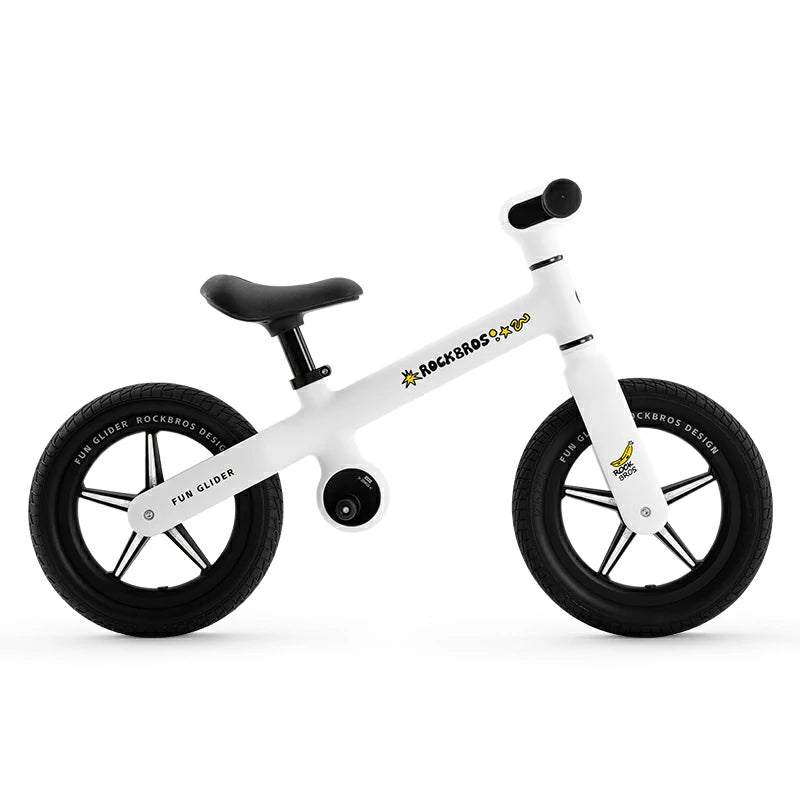
ROCKBROS FGD-P2 12-Inch Kids Balance Bike
$119.99$89.99Save 25%
- Detail
- Ages 2–6, First Balance Bike
- Detail
- 12 in wheels
- Detail
- Use: Balance
A 3.2kg no-pedal balance bike with battery-free light-up wheels, built for ages 2–6.
Low-maintenance pedal bike
20% offPedal16/20 in wheels
- Wheel
- 16/20"
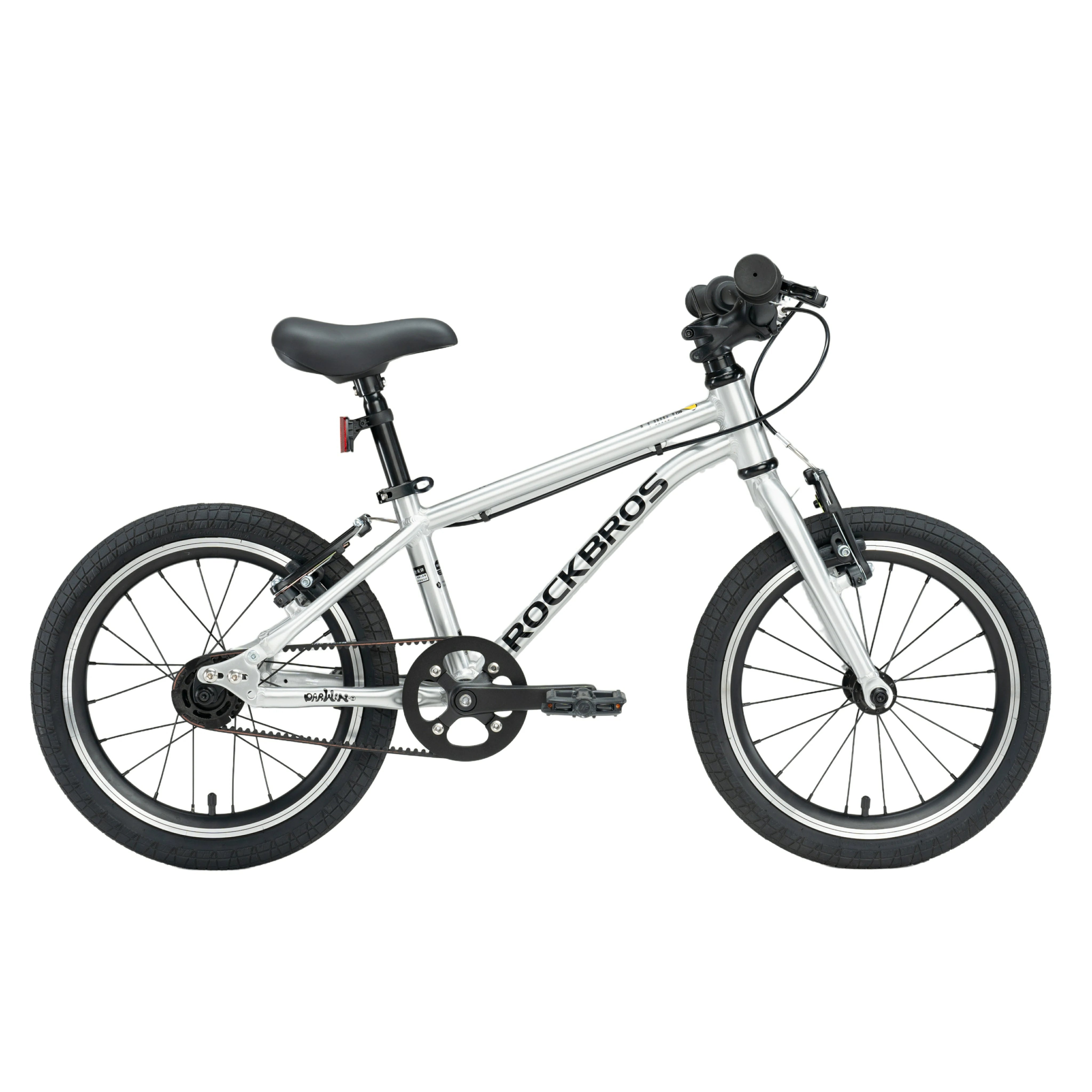
ROCKBROS Darwin II Kids Belt-Drive Bike (16"/20")
$439.99$349.99Save 20%
- Detail
- Low-Maintenance Kids’ Commuting
- Detail
- 16/20 in wheels
- Detail
- Use: Pedal
An aluminum kids’ bike with a low-maintenance belt drive, offered in 16" (ages 5–9) and 20" (ages 6–12) sizes.
16-inch first pedal bike
46% offPedal16 in wheels
- Wheel
- 16"
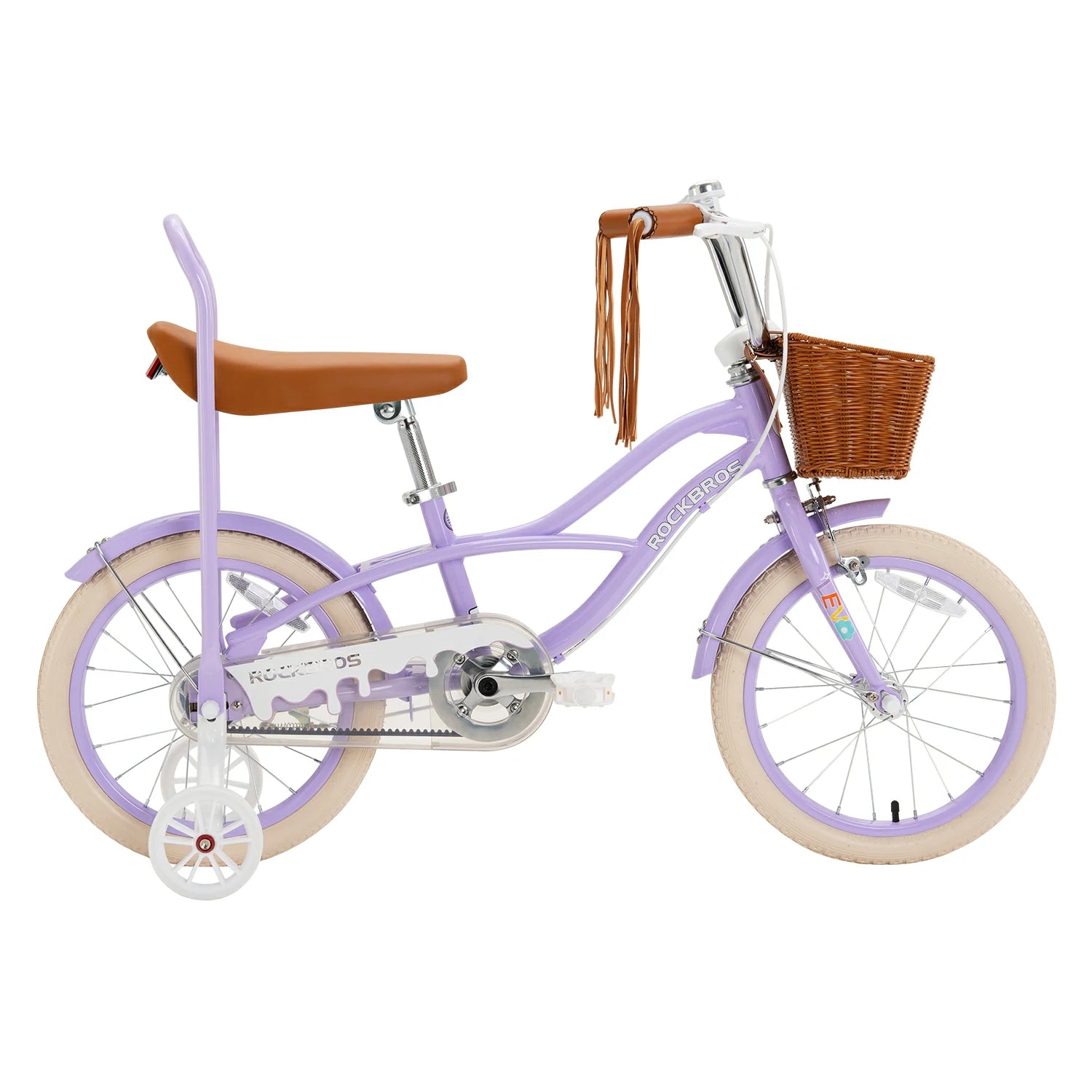
ROCKBROS Q-BOAT 16-Inch Kids Bike
$499.00$269.99Save 46%
- Detail
- Ages 4–8, First Pedal Bike
- Detail
- 16 in wheels
- Detail
- Use: Pedal
A 16-inch beginner bike with training wheels, a belt drive, and dual brakes, sized for ages 4–8.
This page contains affiliate links. If you buy through one, we may earn a commission at no extra cost to you. Learn more.
Wheel Size by Age (Starting Point Only)
These are rough starting points — always confirm against inseam before buying, since kids vary widely at every age.
- 12" wheels: roughly ages 2–4, balance bikes and first pedal bikes
- 14" wheels: roughly ages 3–5
- 16" wheels: roughly ages 4–6, often the first bike with hand brakes
- 18–20" wheels: roughly ages 6–9
- 20–24" wheels: roughly ages 8–12, transitioning toward adult-style geometry
- 24–26" wheels: roughly ages 10+, approaching small-adult or youth mountain bike sizing
Weight Matters More for Kids Than Adults
A bike that’s too heavy relative to a child’s body weight is exhausting and discouraging to ride — kids notice this even if they can’t articulate why they don’t want to ride. As a rule of thumb, a kids’ bike should weigh no more than about 40% of the child’s body weight; lighter is better. Cheap steel-frame bikes are often 5–10 lbs heavier than aluminum equivalents in the same size, which is a much bigger relative difference for a 40 lb child than it would be for an adult.
Brakes: Coaster vs. Hand Brakes
Younger kids (roughly under 5–6) often do better starting with a coaster brake (pedal backward to stop) since hand strength and coordination for hand brakes develops later. Around 16" wheels is the typical transition point to bikes with hand brakes, sometimes alongside a coaster brake as backup. Make sure whichever hand brakes are included are sized for small hands — full-size adult brake levers can be genuinely hard for a young child to squeeze with enough force to stop.
How We Keep This Guide Useful
We start with the riding problem, then weigh specs that change the real ownership experience: fit, capacity, range, braking, storage, serviceability, and price. Product cards only appear when the product is live and reviewed for the site, and this guide was last checked on 2026-07-23.
FAQ
How do I know what size bike to buy for my kid?
Measure your child’s inseam (standing height from the ground to the crotch) and match it against the bike’s standover height, not just age-based marketing. Our Bike Size Selector does this conversion for you.
Should a kids’ bike have training wheels or be a balance bike?
Most bike educators now recommend balance bikes (no pedals, feet-on-ground) over training wheels for teaching balance — kids typically transition to pedaling sooner without training wheels to unlearn. Balance bikes work well from roughly age 2 up until a child is ready for a pedal bike around 4–5.
Related Guides & Tools
Bike Size Selector
Enter height and inseam to get a recommended frame and wheel size.
New Kids' Bike Checklist
Sizing, safety gear, and first-ride prep in one checklist.
Best Bike Locks
Kids’ bikes are common theft targets — a lightweight lock they can use themselves helps.
Bike & E-Bike Glossary
Standover height, inseam, and other sizing terms from this guide, defined in one place.