Start Here
Entry-level / touring: ROCKBROS RIDA-P2E Aluminum Road BikeBuying Guide
Best Road Bikes for Fitness & Commuting
Road bikes aren't just for racing — the right one is a genuinely great commuter and fitness bike, if you pick past the spec-sheet marketing.
Most road bikes are marketed at racers, which makes the spec sheets confusing if you just want something fast and comfortable for commuting or fitness riding. This guide skips the racing jargon and focuses on the choices that actually matter for that use case: handlebar position, frame material, and brake type.
Decision Point
Flat Bar vs. Drop Bar: Pick Your Riding Position FirstLast Checked
2026-08-02Picks from our shop
Choose This If
- ROCKBROS RIDA-P2E Aluminum Road Bike: Budget Commuting, Flat-Bar Road Riding
- ROCKBROS Gale Aluminum Road Bike: Commuting, Fitness Riding
- ROCKBROS CTR Carbon Fiber Road Bike: Racing, Endurance Riding
Skip This If
- You want drop bars for longer fitness rides.
- You want a flat-bar city bike or a carbon race bike.
- This is a locked-up commuter — aluminum is the more rational frame.
| Detail | ROCKBROS RIDA-P2E Aluminum Road Bike | ROCKBROS Gale Aluminum Road Bike | ROCKBROS CTR Carbon Fiber Road Bike |
|---|---|---|---|
| Fit | Entry-level / touring | Commuting and fitness | Carbon — longer miles |
| Price | $569.99 | $989.99 | $2,499.99 |
| Best For | Budget Commuting, Flat-Bar Road Riding | Commuting, Fitness Riding | Racing, Endurance Riding |
| Key Specs | See product details | See product details | See product details |
Entry-level / touring
14% offCommuting
- Ride
- Commuting
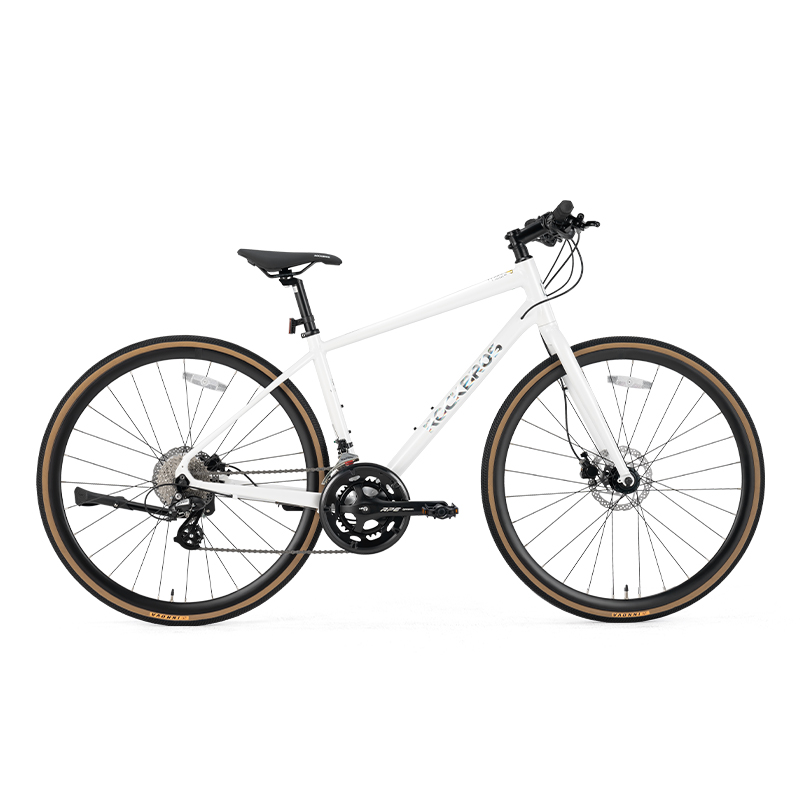
ROCKBROS RIDA-P2E Aluminum Road Bike
$659.99$569.99Save 14%
- Detail
- Budget Commuting, Flat-Bar Road Riding
- Detail
- Use: Commuting
A budget-friendly flat-bar aluminum road bike with 16-speed shifting and hydraulic disc brakes.
Commuting and fitness
CommutingFitness
- Ride
- Commuting
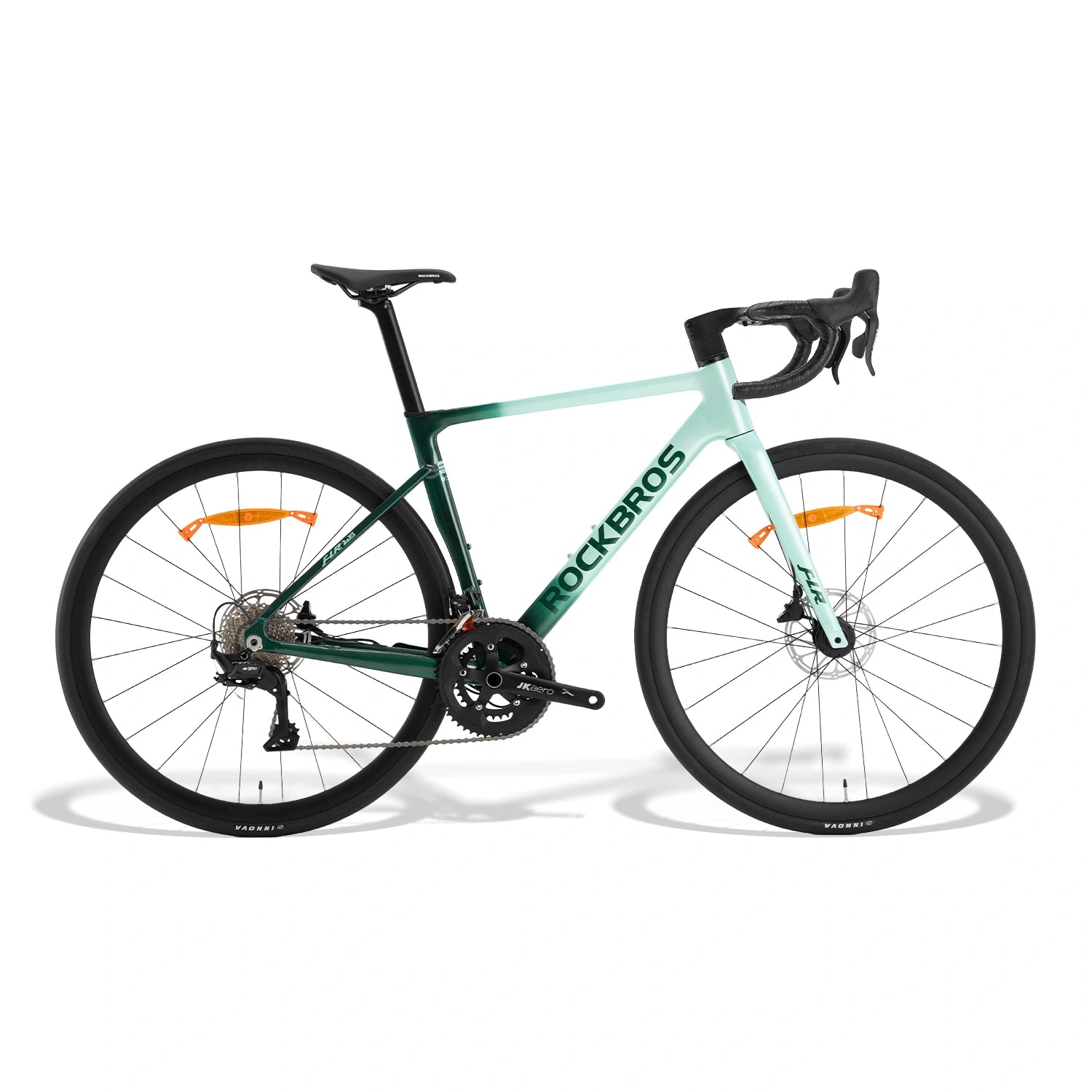
ROCKBROS Gale Aluminum Road Bike
$989.99
- Detail
- Commuting, Fitness Riding
- Detail
- Use: Commuting, Fitness
A lightweight aerodynamic aluminum road bike with 2x10-speed shifting and hydraulic disc brakes.
Carbon — longer miles
17% offRacingFitness
- Ride
- Racing
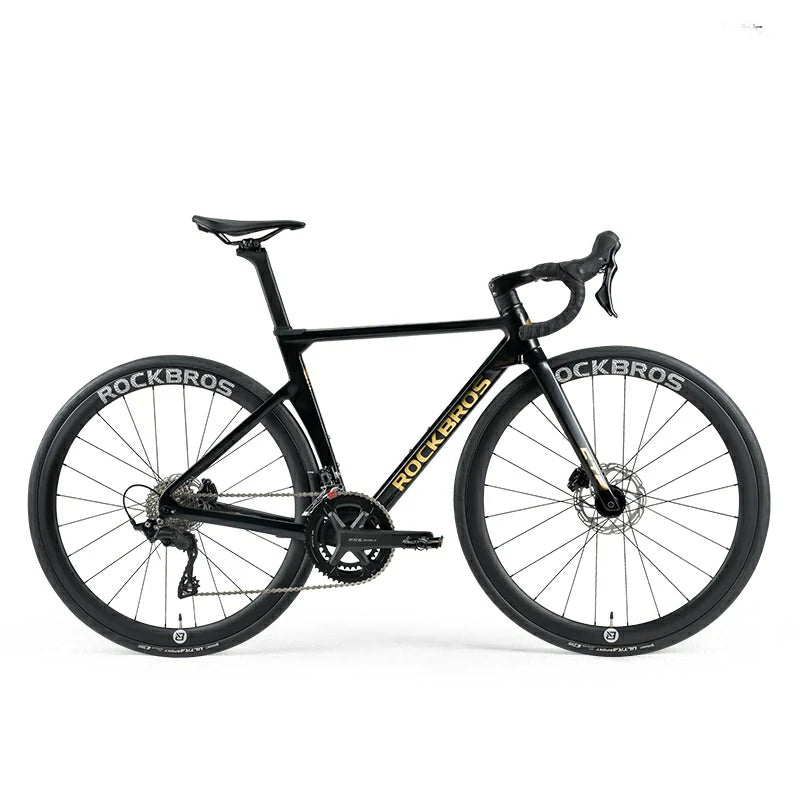
ROCKBROS CTR Carbon Fiber Road Bike
$2,999.00$2,499.99Save 17%
- Detail
- Racing, Endurance Riding
- Detail
- Use: Racing, Fitness
A sub-9kg full carbon fiber road bike with 2x12-speed shifting, hydraulic disc brakes, and 40mm carbon rims.
This page contains affiliate links. If you buy through one, we may earn a commission at no extra cost to you. Learn more.
Flat Bar vs. Drop Bar: Pick Your Riding Position First
Drop bars — the curved handlebars associated with classic road bikes — put you in a lower, more aerodynamic position and give you multiple hand positions for long rides, the traditional choice for fitness and endurance riding. Flat-bar road bikes trade that for an upright, more relaxed position closer to a hybrid bike, which most commuters find easier to live with in city traffic: better visibility, easier to look over your shoulder, and less strain if you're riding in regular clothes rather than cycling kit.
If you're not sure which you'll prefer, lean flat-bar for pure commuting and drop-bar if fitness mileage is the bigger priority — the aerodynamic gain from drop bars only really pays off once you're riding longer distances at higher effort.
Aluminum, Chromoly, or Carbon: What the Frame Material Buys You
Aluminum is the standard choice at this price range — light, stiff, and inexpensive to manufacture, though it transmits more road vibration than the alternatives. Chromoly (a steel alloy) weighs a bit more but rides smoother over rough pavement, worth considering if your commute includes cracked asphalt. Carbon fiber costs significantly more but cuts real weight and damps vibration better than either — worthwhile once you're riding enough miles to feel the difference, overkill if you're riding a few miles to work a few days a week.
Don't assume carbon is automatically the "better" choice for a commuter bike specifically — a carbon frame locked up outside all day is a more expensive theft target and isn't any more theft-resistant than aluminum. Match the frame material to how and where you'll actually use the bike, not just your budget ceiling.
Brake Type Matters More Than Gear Count
Hydraulic disc brakes are the current standard for good reason — consistent stopping power in wet weather with less hand strength required, and they self-adjust as pads wear. Mechanical (cable-actuated) disc brakes are cheaper and easier to service without special tools, but need more frequent manual adjustment and give up some stopping power and modulation compared to hydraulic. Wire-pull disc brakes, used on some budget road bikes, split the difference — better than a cable rim brake, but still short of true hydraulic performance.
For a daily commuter riding in all weather, prioritize hydraulic disc brakes over an extra few gears — braking consistency in the rain affects your actual safety more than having 20 speeds instead of 16.
Consider a Gravel Bike If Pavement Isn't the Whole Story
If your commute includes a gravel path or dirt shortcut, or you want one bike that covers weekday commuting and weekend mixed-terrain rides, a gravel bike is worth a look before defaulting to a pure road bike. Wider tire clearance — typically 700x38–45C versus 700x25–32C on a road bike — trades a little pavement speed for real comfort and control off-pavement, without giving up drop-bar efficiency on the road.
How We Keep This Guide Useful
We start with the riding problem, then weigh specs that change the real ownership experience: fit, capacity, range, braking, storage, serviceability, and price. Product cards only appear when the product is live and reviewed for the site, and this guide was last checked on 2026-08-02.
FAQ
Is a road bike a good choice for commuting?
Yes, especially a flat-bar or endurance-geometry road bike — they're faster than a hybrid or mountain bike on pavement and, with disc brakes and reasonable tire clearance, handle everyday commuting conditions fine. The main tradeoff versus a hybrid is a narrower tire and a more committed riding position on drop-bar models.
Should I get a flat-bar or drop-bar road bike?
Flat-bar for pure commuting comfort and better visibility in traffic; drop-bar if fitness mileage and longer rides are the priority, since the lower, more aerodynamic position pays off more the farther and faster you ride.
What's the difference between hydraulic and mechanical disc brakes?
Hydraulic brakes use fluid to transfer force, giving more consistent stopping power and self-adjusting as pads wear. Mechanical disc brakes use a cable, are cheaper and simpler to service at home, but need more frequent manual adjustment and give up some stopping power and control in wet conditions.
Do I need a carbon fiber road bike?
Not for commuting specifically. Carbon saves real weight and rides smoother over long distances, which matters more for fitness mileage than a daily commute. Aluminum or chromoly at a lower price point is a perfectly reasonable choice for most commuters, and avoids locking up a more expensive theft target outside all day.
Related Guides & Tools
How to Choose a Commuter Bike
Not sure fitness is your top priority? Start here before comparing frame materials and brake types.
Road Bike vs. Hybrid Bike for Commuting
Still deciding between a road bike and a more comfort-focused hybrid? Here's the direct tradeoff.
Best Bike Locks
A road bike is a bigger theft target than most commuter bikes — don't cheap out on the lock after spending real money on the bike.
Bike Commuting Checklist
Everything else worth checking before you start commuting on a new bike, road bike or otherwise.
Long-Distance Ride Prep Checklist
Riding this bike for fitness mileage, not just a short commute? Check this before a longer ride.
Bike Commuting: The Complete Guide
Every commuting guide, comparison, and checklist we have, in one place.
Bike & E-Bike Glossary
Frame material, drivetrain, and brake terms from this guide, defined in one place.