Start Here
Full-size commuter folder: ROCKBROS SKN 20-Inch Folding BikeBuying Guide
Best Folding Bikes for Commuters
Folding bikes trade a little ride quality for a lot of flexibility — here’s how to tell if that trade is worth it for your commute.
Folding bikes solve a specific problem: you need a bike that can live in a small apartment, ride a train or bus partway, or tuck under a desk at the office. If none of that applies to you, a standard commuter bike will almost always ride better for the same money.
If it does apply, this guide covers the specs that determine whether a folding bike will actually work for your routine — not just fold, but fold fast enough and small enough to matter.
Decision Point
Wheel Size Is the Biggest TradeoffLast Checked
2026-07-18Picks from our shop
Choose This If
- ROCKBROS SKN 20-Inch Folding Bike: Budget-Friendly Daily Commuter
- ROCKBROS IFN 14-Inch Folding Bike: Smallest Fold, Lightest Carry
- ROCKBROS ACS 16-Inch Folding Bike: Smallest Fold with Full Gearing
Skip This If
- You will mostly ride, not fold — a regular commuter will ride better for the same money.
- You have a multi-mile daily commute on rough pavement.
- You want the most stable commuting-speed ride — look at 20" wheels.
| Detail | ROCKBROS SKN 20-Inch Folding Bike | ROCKBROS IFN 14-Inch Folding Bike | ROCKBROS ACS 16-Inch Folding Bike |
|---|---|---|---|
| Fit | Full-size commuter folder | Smallest fold | Compact 16-inch folder |
| Price | $299.99 | $349.99 | $499.99 |
| Best For | Budget-Friendly Daily Commuter | Smallest Fold, Lightest Carry | Smallest Fold with Full Gearing |
| Key Specs | See product details | See product details | See product details |
Full-size commuter folder
17% offCommuting
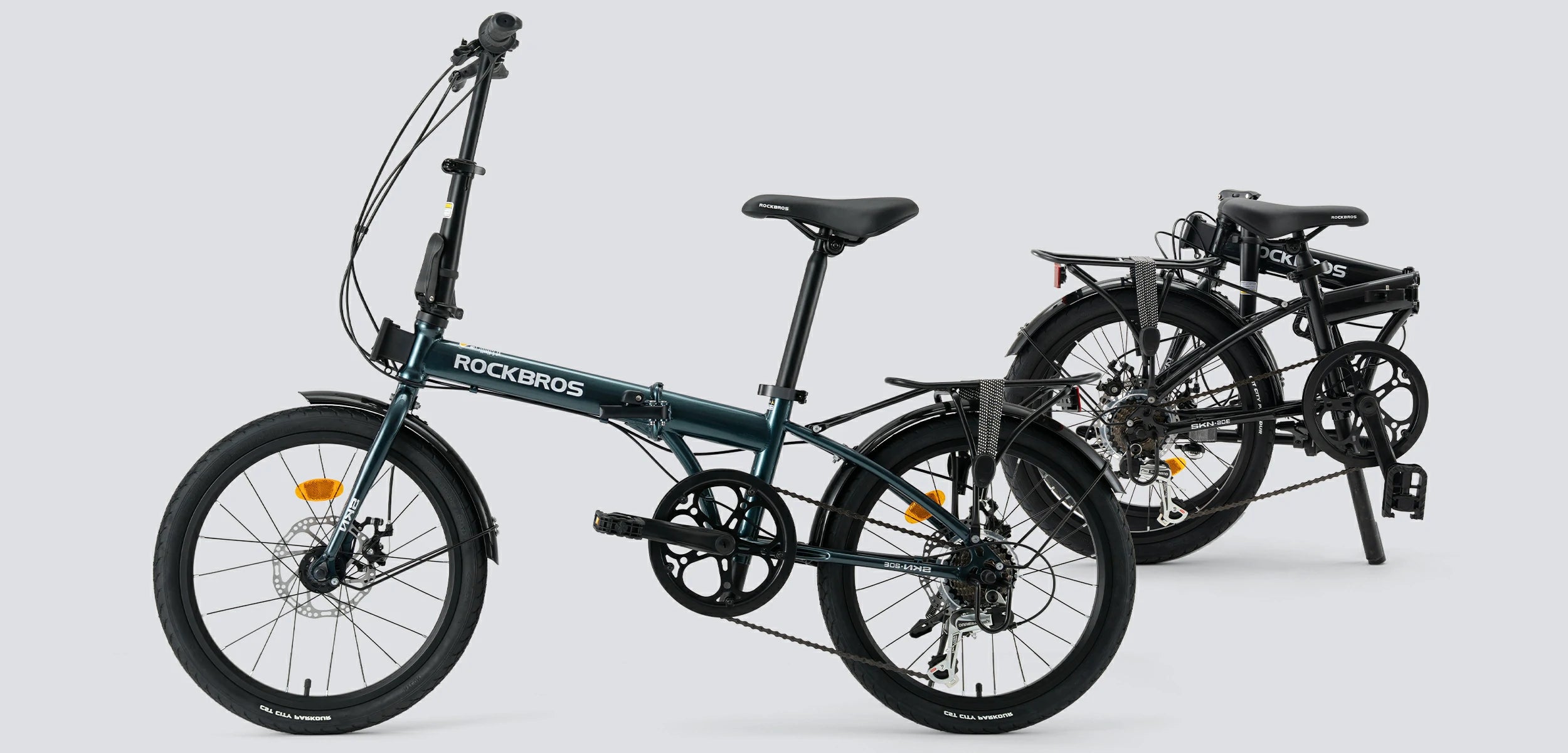
ROCKBROS SKN 20-Inch Folding Bike
$359.99$299.99Save 17%
- Detail
- Budget-Friendly Daily Commuter
- Detail
- Use: Commuting
A non-electric, budget-friendly 20-inch folding bike built for comfortable daily commuting.
Smallest fold
42% offCompact
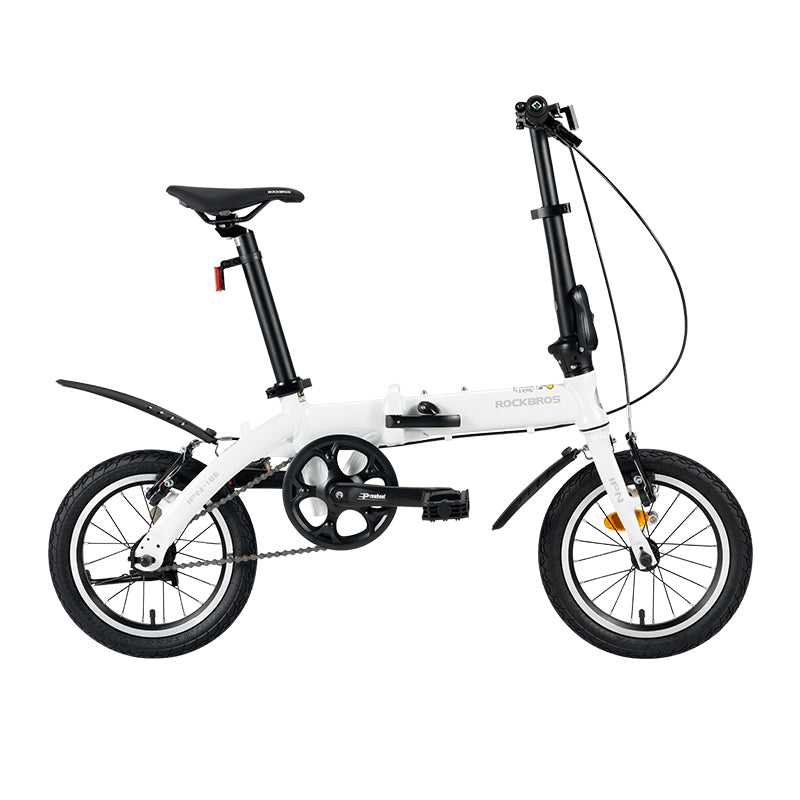
ROCKBROS IFN 14-Inch Folding Bike
$599.99$349.99Save 42%
- Detail
- Smallest Fold, Lightest Carry
- Detail
- Use: Compact
A non-electric, single-speed 14-inch folding bike built for the smallest fold and lightest carry in the lineup.
Compact 16-inch folder
44% offCompact
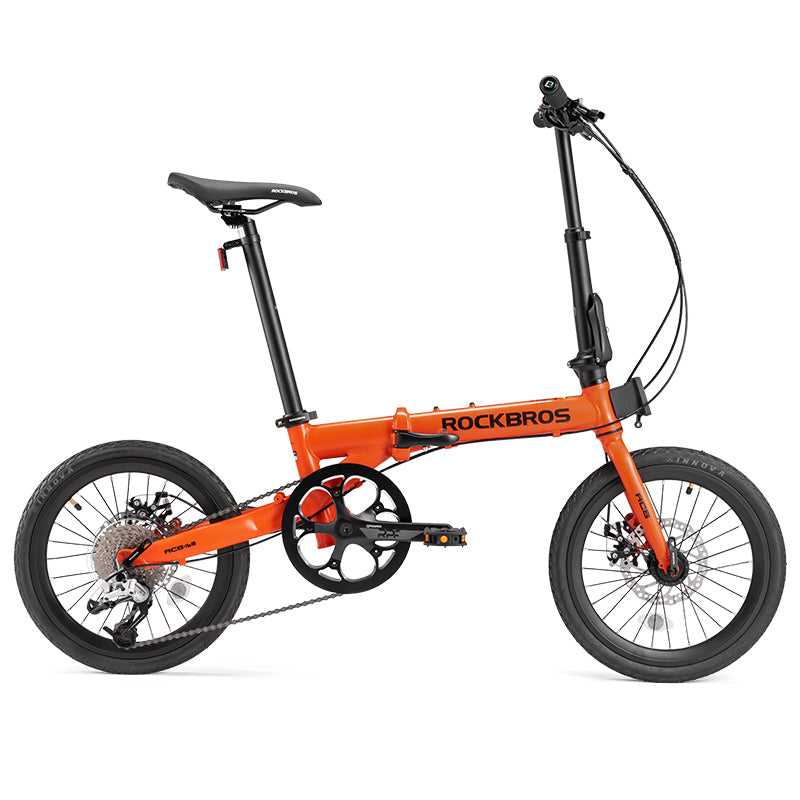
ROCKBROS ACS 16-Inch Folding Bike
$899.99$499.99Save 44%
- Detail
- Smallest Fold with Full Gearing
- Detail
- Use: Compact
A non-electric 16-inch aluminum folding bike with a 9-speed SRAM drivetrain, sized for the smallest fold with full gearing.
This page contains affiliate links. If you buy through one, we may earn a commission at no extra cost to you. Learn more.
Wheel Size Is the Biggest Tradeoff
Most folding bikes use 16", 20", or 24" wheels — smaller than a standard bike’s 700c wheels. Smaller wheels fold smaller and accelerate quicker from a stop, but they also feel every crack and pothole more than larger wheels, and they cover less ground per pedal stroke at a given cadence.
20" wheels are the most common commuter compromise: small enough to fold into a genuinely compact package, large enough to feel reasonably stable at commuting speeds. 16" wheels fold smallest but feel noticeably twitchier; they suit very short, slow trips more than a multi-mile commute.
Fold Time and Folded Size
If you’re folding the bike once at the start and once at the end of your commute, a 20–30 second fold is fine even if it’s not the fastest on the market. If you’re folding it multiple times a day — say, to get on and off a train at several stops — a sub-15-second one-motion fold (frame and pedals in a single mechanism) is worth paying more for.
Check folded dimensions against where you’ll actually store it: under a desk, in a closet, or a train’s bike rack all have different real constraints. A bike that "folds compact" in marketing photos can still be too tall to fit under a standard desk.
Weight Matters More Than on a Regular Bike
You’ll be carrying a folded bike — up stairs, onto a train, into an office — far more than you’d carry a standard commuter bike. Anything over 30 lbs starts to feel like a real chore on stairs. Aluminum-frame folding bikes in the 24–28 lb range are the sweet spot for most commuters; steel frames are cheaper but often push 30+ lbs.
How We Keep This Guide Useful
We start with the riding problem, then weigh specs that change the real ownership experience: fit, capacity, range, braking, storage, serviceability, and price. Product cards only appear when the product is live and reviewed for the site, and this guide was last checked on 2026-07-18.
FAQ
Are folding bikes worth it for commuting?
They’re worth it specifically if you need to combine cycling with transit, store the bike in a small space, or bring it inside a workplace. If none of those apply, a standard commuter bike will generally ride better and cost less for the same budget.
What wheel size folding bike should I get?
20" wheels are the best all-around choice for most commuters — a reasonable balance of ride stability and fold size. 16" wheels fold smaller but ride twitchier; they suit shorter, slower trips.
How much should a commuter folding bike weigh?
Aim for 24–28 lbs if you’ll be carrying it regularly (stairs, transit, into a building). Steel-frame folding bikes are often cheaper but can weigh 30+ lbs, which gets tiring to carry daily.
Related Guides & Tools
How to Choose a Commuter Bike
Not sure portability is actually your biggest constraint? Start here.
Folding Bike vs. Regular Commuter Bike
Still weighing whether portability is worth the tradeoff? Here's the direct comparison.
Bike Size Selector
Even folding bikes come in different size ranges — check your fit first.
Bike Commuting Checklist
Everything to pack and check before a multi-modal commute.
Best Bike Locks
Folding bikes are portable — which also means you should still lock them properly when parked.
Bike Commuting: The Complete Guide
Every commuting guide, comparison, and checklist we have, in one place.